As vehicles become more advanced, the way we care for them is shifting too. More drivers are choosing Paint Protection Film to shield their paint from daily wear and tear. But once PPF is in place, one question almost always follows. Can you still polish or wax your car, or does having this protective layer change the rules?
We do have some good news – PPF does not make car care more difficult. It makes it smarter.
How PPF Changes the Way You Maintain Your Car
Automotive Paint Protection Film is not simply paint. It is a clear, flexible urethane layer designed to take the hits so your clear coat does not have to. High-quality films often feature premium top coats that can resist staining and reduce light surface marks. Because PPF is engineered differently, it responds differently to polishing pads and chemical products. That is not a drawback. Your approach should shift from correction to preservation.
Waxing Over PPF
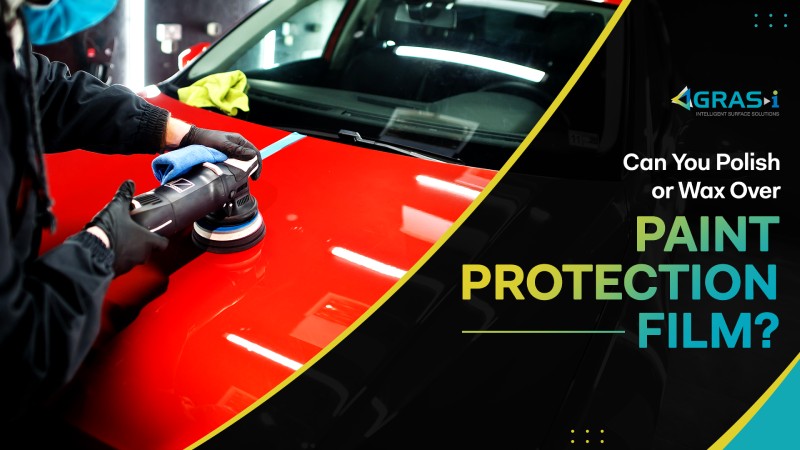
Waxing over PPF is generally safe and often encouraged when done correctly. The products you choose are important. Traditional waxes frequently contain harsh chemicals or synthetic dyes, which can accumulate along the margins of your PPF and damage its appearance over time.
Modern synthetic waxes and sealants are typically a much better choice. They help the surface look shinier, allow water to run off more easily, and make washing quicker and simpler. While wax does not provide additional protection for the film, it does help the final finish appear smooth and well-maintained.
To put it simply, waxing helps the car look good while the PPF layer continues protecting your vehicle.
Is Polishing a Good Idea?
Polishing is definitely where a little extra care is needed. Automotive paint protection film is less harsh than the clear coat on your car, so heavy machine polishing can cause the film to wear down over time.
However, in certain situations, one can use light polishing. It would work in instances such as removing water spots or mild surface haze. It is important to remember that this should always be done using gentle products and minimal pressure.
In many cases, polishing is not needed at all. Most modern PPF can fix light swirl marks by itself when exposed to heat from sunlight or warm water.
Smart Habits for Long-Term Results
A good rule of thumb is to always let any newly installed PPF cure completely before applying wax or sealer. Choosing right Paint protection film is designed to alleviate the burden of maintenance, preserve the value of your vehicle, and keep it looking better than ever with no effort. Remember, when you work with the film instead of against it, it quietly delivers exactly what it promises.