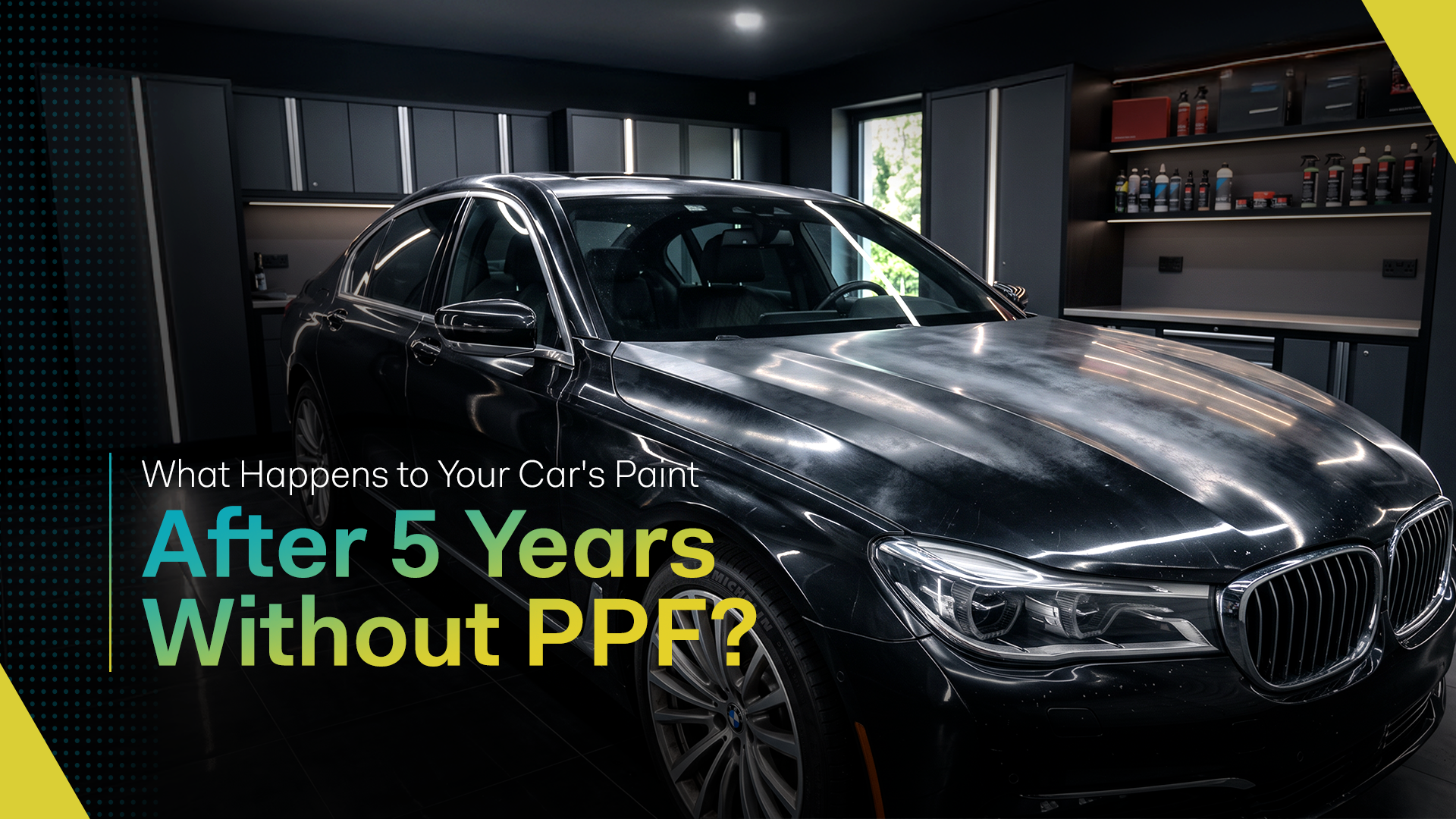
Today, a Paint Protection Film (PPF) has evolved from a niche upgrade for luxury vehicles into a practical, long-term necessity for all kinds of car owners. Developments in material technology and installation techniques have contributed to its efficiency, performance, and durability, increasing its popularity. As a result, PPF is no longer just about short-term shine but about preserving a car’s original paint for years. The question that still matters most, however, is how long PPF truly lasts through everyday driving conditions.
Well, in real-world conditions, a high-quality PPF installed by trained professionals typically lasts between 5 and 10 years. Premium films such as LLumar PPFs, when cared for properly, may even extend beyond this range. On the other hand, lower-quality or local PPF films often begin to degrade within 3 to 5 years, showing visible signs of yellowing, cracking, or loss of adhesion much earlier.
How PPF Performs Over Time in Real-World Conditions
During the initial years after installation, PPF performs at its highest level. The film remains nearly invisible, retains excellent gloss or matte consistency, and provides strong resistance against stone chips, minor scratches, and environmental contaminants. Self-healing properties work quickly, and maintenance requirements are minimal, making this phase largely effortless for the owner.
But what keeps the same performance consistent for the remaining years depends on the quality and installation.
The Role of Installation in PPF Longevity
Even the best film cannot compensate for poor installation. Professional installation ensures proper surface preparation, precise stretching, and clean edge finishing, all of which are critical for long-term performance. Improper installation can lead to trapped moisture, premature edge lifting, and early adhesive failure, drastically reducing the lifespan of the film, regardless of its quality.
Climate and Driving Conditions Matter
Environmental exposure plays a significant role in determining how long PPF lasts. In regions with high temperatures, intense UV exposure, dust, and pollution, the film experiences greater stress over time. In such conditions, lack of maintenance can reduce the film’s lifespan by one to two years. On the other hand, vehicles that are parked in shaded areas and driven with care tend to retain PPF performance for much longer.
Maintenance Makes a Difference
While PPF is often described as low maintenance, it still requires mindful care. Regular hand washing with pH-neutral shampoos, prompt removal of bird droppings and bug residue, and avoiding abrasive cleaning techniques help preserve both the film and its top coat. On the other hand, aggressive chemicals, machine polishing, and dry wiping dusty surfaces can accelerate wear and reduce clarity prematurely.
For car owners who plan to keep their vehicles long-term, care about resale value, and want to preserve factory paint, PPF remains a highly worthwhile investment. Repainting panels is often more expensive and permanently alters the originality of the vehicle, which can negatively affect resale. In comparison, PPF acts as a reversible layer of protection that safeguards both appearance and long-term value.