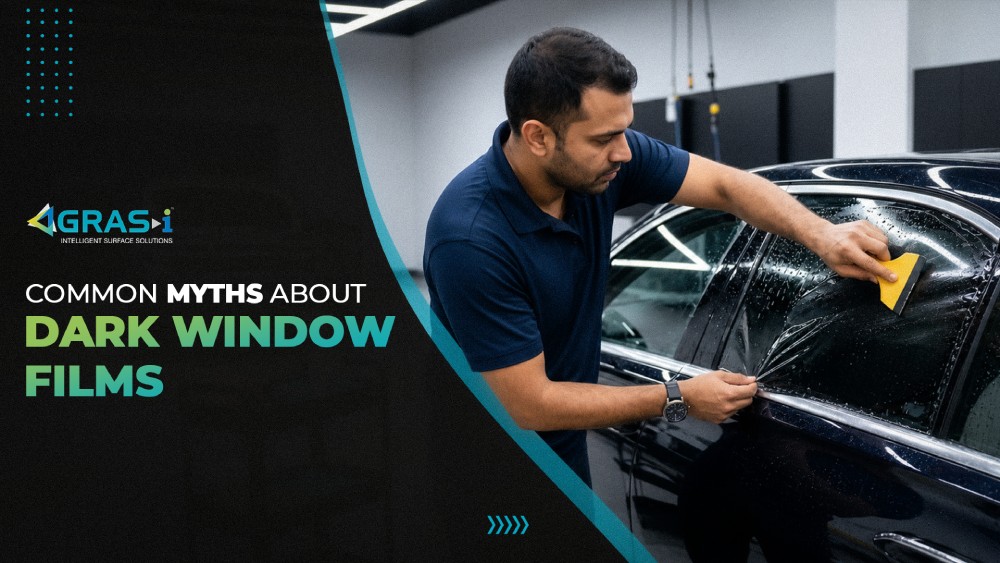
When most people shop for window film, they assume that the darker the window film, the cooler it will keep the cabin. It sounds logical. If less light gets through, less heat should too. Right?Not exactly.
While a darker film can reduce glare and help improve privacy, darkness alone is not what determines how much heat a window film blocks. In fact, a clear, high-performance film can often outperform a darker basic tint when it comes to keeping your vehicle cool.
What Actually Determines How Much Heat is Rejected?
The real factor behind heat rejection is not how dark the film looks. It is the technology built into it. Much of the heat you feel inside your vehicle comes from infrared radiation, an invisible part of sunlight that carries heat energy. Premium window films are engineered to block this infrared energy before it enters the cabin. That means two films may appear similar in shade yet perform very differently in direct sun.
Why the Myth Exists
The misconception comes from older dyed window films. Traditional dark tints, by their nature, tend to reduce visible light. This makes the interior of any room feel dimmer and creates an impression of the vehicle being cooler. However, many of these films tend to only absorb the heat instead of fully rejecting it. This means that the glass can still become hot and make the room warm. So, while the space may look darker, it may not actually feel much cooler.
Why Film Quality Matters More Than Shade
Modern premium films use more modern technology, such as ceramic window film or nano-ceramic technology, to reject heat more effectively without needing to be extremely dark. This allows drivers to choose a clear window film while still getting the benefits of strong heat rejection. Additionally, it also offers better visibility. This is especially important for drivers who want to be able to reduce the amount of heat in their area, without having to sacrifice the visibility they get, or making the vehicle look overly tinted.
To conclude, yes, dark automotive window film can improve privacy and reduce glare, but it does not automatically mean that it rejects heat better. If staying cooler is the priority, the smarter move is to focus on film performance specifications and technology rather than shade alone.
That is why premium solutions like LLumar automotive window films are engineered with film technology that offers different shade options, such as ceramic, metallized and dyed. This allows drivers to prioritise heat rejection and comfort without relying solely on darkness. Many LLumar films are specifically designed to target infrared heat while still offering flexibility in appearance and visible light transmission. Enquire here.