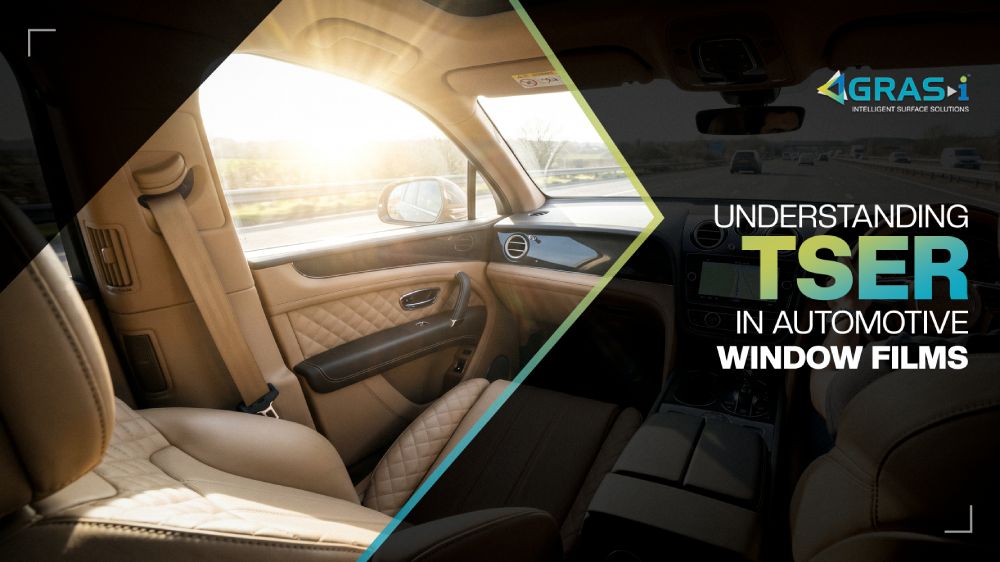
When you set out to choose the right window film for your vehicle, you may come across some market claims, such as ‘heat rejection is 99% for window film’. But is it really 99% heat rejection or just 99% UV rejection? It might sound complicated, but it plays a huge role in how comfortable your car feels, especially in hot weather. TSER (Total Solar Energy Rejected) includes components such as UV and IR. On cue, let’s break it down further for you.
Firstly, What is TSER?
TSER is a simple way to understand how much heat a window film keeps out of your car. In essence, it measures the film’s ability to block the sun’s total heat energy. This heat comes from three components of sunlight:
- UV (Ultraviolet rays) – about 3%
- IR (Infrared rays) – about 54% (the biggest contributor to heat)
- VLT (Visible Light Transmission) – about 43%
TSER combines all of these to give you one clear number. For example, if a film has a TSER of 52%, it means it blocks 52% of the sun’s total heat energy from entering your car. The higher the TSER, the better the heat rejection, keeping your car noticeably cooler. If you’ve ever stepped into a car parked under the sun, you already know how intense that heat can be. That’s exactly where a high TSER film makes a real difference.
Here’s why TSER matters:
- Keeps Your Car Cooler: A high TSER film reduces heat buildup, making your car more comfortable even on peak summer days.
- Reduces AC Load: Less heat inside means your air conditioner doesn’t have to work as hard, which can improve fuel efficiency.
- Improves Driving Comfort: Lower heat naturally means less sweating, less fatigue, and a much better driving experience.
A darker film doesn’t always mean better heat rejection. TSER is the real indicator.
If you live in a city with intense heat, going for a higher TSER is always a smart choice. When selecting a window film, don’t just go by its appearance. Instead:
- Check the TSER rating
- Balance it with visibility (VLT)
- Ensure it complies with local tinting laws
- Choose quality brands such as LLumar for durability
TSER might sound technical, but it’s actually your best friend when picking the right window film. If comfort, protection, and efficiency matter to you, a higher TSER film is always worth the investment. At the end of the day, it’s not just about how your car looks but about how it feels inside – the comfort and driving experience.