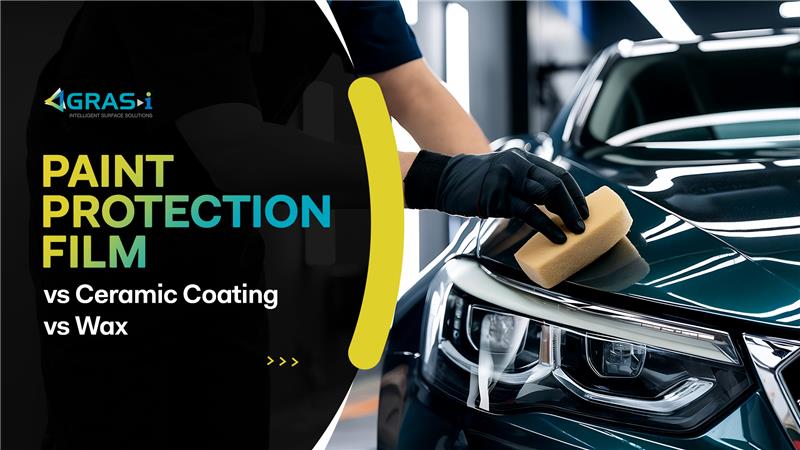
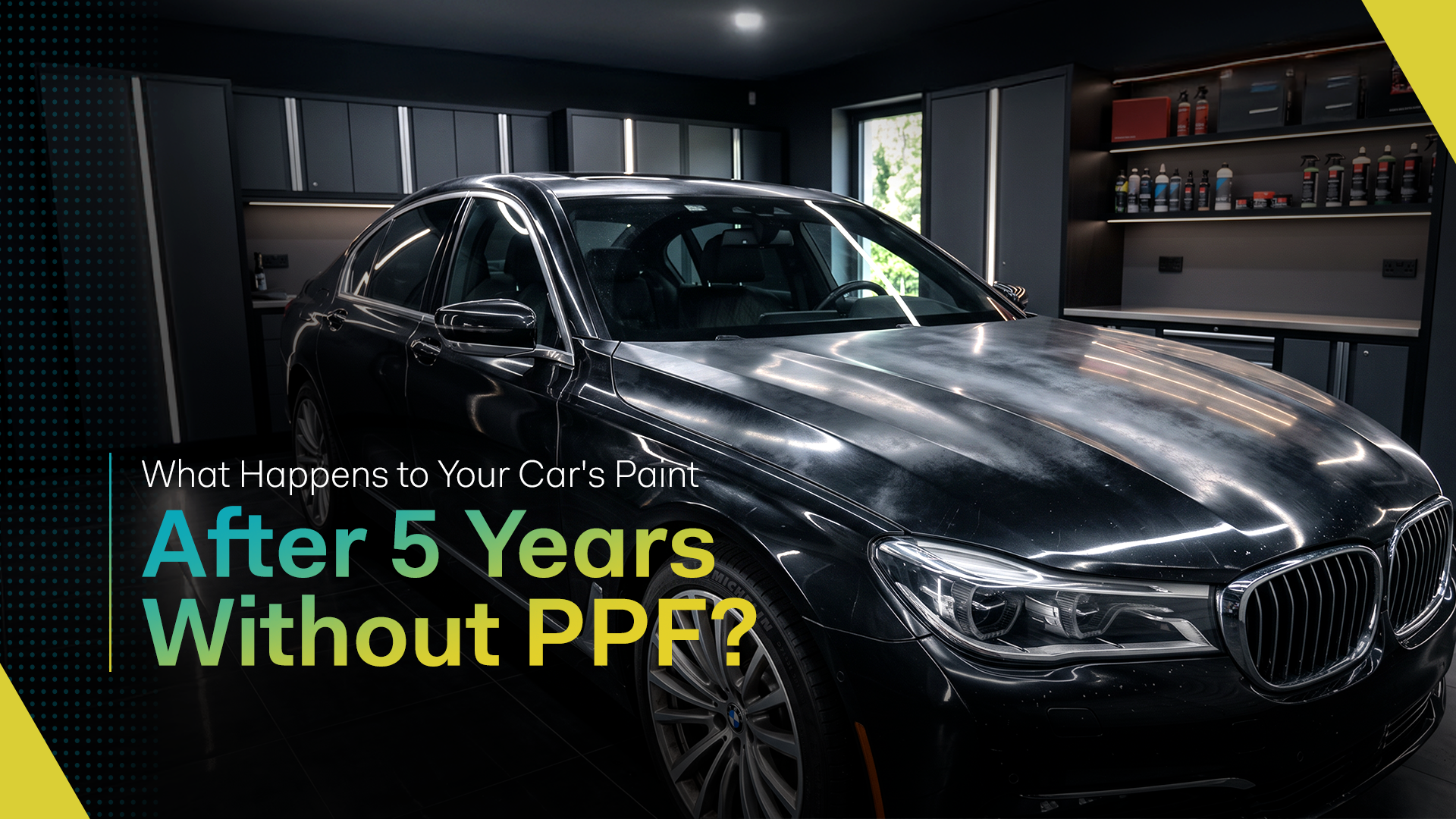
If you’ve ever wondered why some cars seem to stay glossy and scratch-free for years while others start looking dull within months, the answer often lies in how their paint is protected. Car owners are often confused about the differences between a Paint Protection Film (PPF), ceramic coating, and traditional wax. While all three aim to protect your car’s paint, they do so in very different ways. Below, we discuss the features and benefits of each so that you can make an informed decision.
This guide explains each option clearly, without technical overload, so you can decide what actually suits your car and driving habits.
What Is Paint Protection Film (PPF)?
Automotive paint protection film is a transparent polyurethane film that is applied directly over a car’s painted surfaces. Once installed, it forms a physical barrier between the paint and the external world. This means that stone chips, light scratches, and abrasions hit the film first instead of the paint.
Today, most high-quality PPFs, such as LLumar PPF, come with self-healing technology. Minor scratches disappear when exposed to heat from sunlight or warm water, allowing the surface to return to its original finish. They are also hydrophobic and strain-resistant, exuding extreme resilience against external contaminants. A PPF is available in gloss PPF or matte finishes and is almost invisible when professionally installed. It is ideal for car owners who want maximum protection, especially for new, luxury, or high-value vehicles, or for those who drive frequently on highways and rough roads.
What Is Ceramic Coating?
Ceramic coating is a liquid polymer that chemically bonds with a car’s paint. Once cured, it creates a hard, glossy layer that enhances shine and makes the surface hydrophobic. This means water, dirt, and grime slide off more easily, making the car easier to clean.
However, unlike PPF, ceramic coating does not offer real impact or scratch protection. It helps resist chemical stains, UV damage, and oxidation, but it cannot stop stone chips or physical abrasions. Ceramic coatings are more durable than earlier versions and can last anywhere from one to five years, depending on the product and maintenance. Best for owners who prioritise gloss, easy maintenance, and protection from environmental damage rather than physical impacts.
What About Traditional Car Wax?
The oldest and simplest form of paint protection, traditional wax is usually made from natural carnauba wax or synthetic alternatives and is applied to the paint to create a temporary protective layer. Wax enhances shine and provides some water repellency, but its protection range is very limited.
In modern driving conditions, wax typically lasts only a few weeks to a couple of months. It offers minimal resistance to UV rays, chemicals, and scratches, and requires frequent reapplication to maintain results. While wax is affordable and easy to apply, it is more about appearance than long-term protection and is best suited for older cars, short-term cosmetic enhancement, or owners who enjoy frequent detailing.
How Do Paint Protection Film vs Ceramic Coating vs Traditional Wax Compare in Real-World Use?
The biggest difference between these three options lies in how they handle physical damage. Paint Protection Film is the only solution that physically absorbs impacts and prevents scratches and chips from reaching the paint. Ceramic coating focuses on chemical resistance, gloss, and ease of cleaning, but does not prevent physical damage. Wax, on the other hand, provides the least protection and mainly enhances shine for a short period.
When it comes to longevity, PPF clearly lasts the longest, often up to a decade with proper care. Ceramic coating sits in the middle, lasting a few years at best, while wax needs constant re-application. If your priority is long-term protection, maintaining resale value, and avoiding repainting costs, car PPF is the most effective solution. It is no longer just about making a car look good but also about preserving its value and reducing long-term maintenance stress.