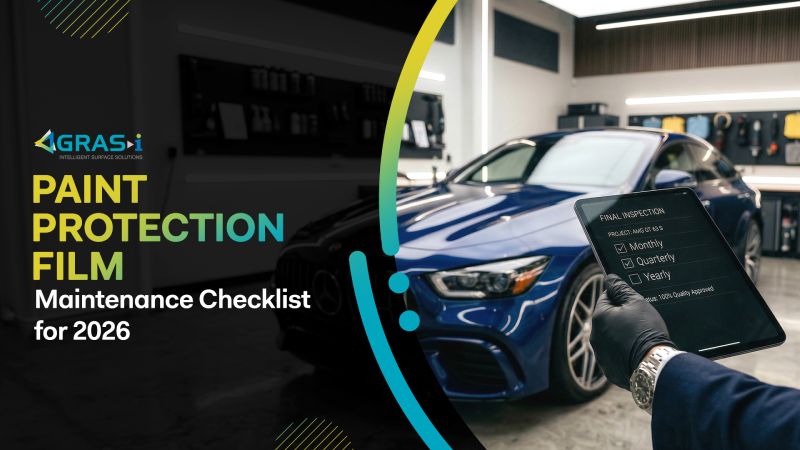
Today, a paint protection film (PPF) is a necessity for all cars. It is a worthy investment, but it requires proper care and maintenance to perform at its best. Think of this checklist as a simple routine that keeps your car looking newer for longer without overdoing it.
Non-Negotiables
You should wash your car every 7-10 days to prevent dust, pollution, bird droppings, and water stains from settling into the film. Regular washing helps maintain the film’s clarity and prevents long-term staining.
Always use a pH-neutral car shampoo, as harsh or acidic cleaners can degrade the film over time. Moreover, remember to wash using soft microfiber mitts to avoid creating micro-scratches on the surface. It is also important to rinse the vehicle thoroughly after washing; leftover soap residue can leave streaks and reduce the film’s gloss.
Automatic car washes should be avoided since the brush-based systems can create swirl marks, lift film edges, and dull the PPF’s finish. Hand washing or touchless car washes remain the safest options.
Monthly Checkpoints
It is recommended to inspect the edges and corners of the PPF at least once a month, especially around door handles, bumpers, mirrors, and bonnet edges. Early detection of lifting or trapped dirt makes it easier to fix minor issues before they become major problems that cost more.
Any contaminants, such as bird droppings, bug splatter, or stains, should be removed as soon as possible. Prompt cleaning prevents these substances from chemically bonding with the film. Spot cleaning should always be done using a PPF-safe detailing spray; avoid scrubbing harshly. After every wash, make sure you dry the car with a clean microfiber towel. Air drying can leave mineral deposits and water spots, which may dull the film over time.
Quarterly Maintenance
Every three to four months, you should apply a PPF-safe sealant or ceramic topper to enhance gloss and improve protection against UV rays and contaminants. This also makes routine cleaning easier.
It is essential to ensure that the product used is specifically designed for PPF, as not all ceramic coatings or sealants are compatible with protective films.
Light swirl marks can often be reduced or eliminated by activating the film’s self-healing properties. This can be done naturally by parking the car in warm sunlight or by gently pouring lukewarm water over the affected areas.
Annual Deep Care Routine
At least once a year, your car should undergo a professional inspection and detailing session. A trained professional will make sure the film is deep-cleaned, and the surrounding paint is properly maintained without damaging the car PPF.
If any section of the film is torn, excessively scratched, or discoloured, it is best to replace only the affected panel. This is also one of the biggest advantages of PPF – individual panels can be replaced without removing the entire film.
Driving and Parking Habits That Make a Difference
Parking in shaded areas helps reduce prolonged UV exposure, which can affect the longevity of the film over time. Avoiding parking under trees is equally important, as bird droppings are among the most damaging contaminants for car PPF. Moreover, extra care should be taken during refuelling, as fuel spills can stain or weaken the film if they are not wiped off immediately. Remember, harsh chemicals should never come in contact with PPF, as strong degreasers, solvents, and alcohol-heavy cleaners can damage the film’s surface and adhesive.
Modern PPF is designed to withstand daily wear, environmental exposure, and minor abrasions. However, its longevity depends on consistent care and mindful usage. With regular maintenance and daily care, high-quality PPF such as LLumar PPF can last anywhere between five and ten years while keeping your car looking showroom-new and well-protected.