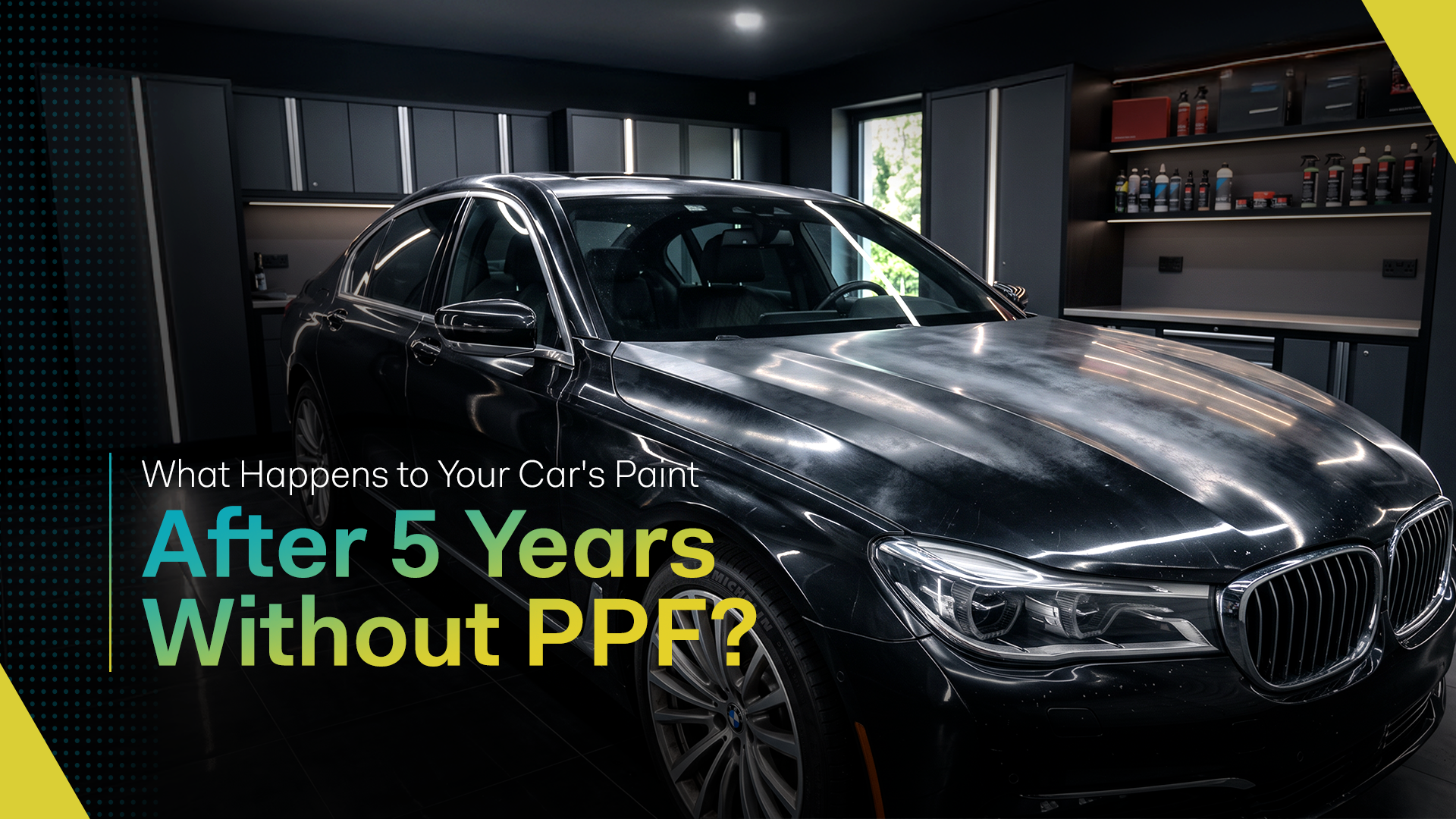
New cars are characterized by a certain shine to them – a deep, glossy finish that lends them opulence. Most owners assume that with regular washing and the occasional wax can retain that shine for years. However, in reality, without any form of protection, five years is usually all it takes for paint to start showing its age, and often much sooner on Indian roads.
Here’s what actually happens to unprotected paint over that time.
1. Swirl Marks:
Every wash can leave behind micro-scratches. Automatic car washes, rough sponges, and dust particles trapped in a wiping cloth all contribute to this. While individually, these marks are invisible, over months and years, they accumulate into the fine swirl marks that are visible under light. Without a protective film, there’s no layer between the wash and the paint, making these marks inevitable.
2. Rock Chips:
Highway driving, gravel roads and even city traffic constantly kick up small stones and debris. Each impact chips away a tiny fleck of paint. Unlike swirl marks, this can go deeper, often exposing the primer or bare metal underneath. If left unaddressed, these spots become entry points for rust, especially during the monsoon season.
3. UV Exposure:
India’s sun is relentless, and constant UV exposure can break down the clear coat over your car’s paint over time. This manifests as fading, a dull finish, and reduced gloss that the car once had. Darker colours, in particular, show oxidation more visibly than lighter shades.
4. Stains From Bird Droppings:
Bird droppings and tree sap are acidic in nature and can etch into unprotected clear coat within hours, especially in hot weather. It starts as a spot that can be wiped off easily but can soon turn into a permanent stain or a faint discoloured patch if it isn’t cleaned quickly.
The accumulation of these pollutants over five years can negatively transform a car’s appearance. Moreover, when you want to resell your car, paint condition is one of the first things a buyer notices, and it directly influences what they’re willing to pay. A car with visibly aged paint, even with a well-maintained engine and interior, naturally gets valued lower. This is exactly the gap that paint protection film is built to close. Instead of paint slowly wearing down over five years, automotive paint protection film acts like a protective layer that absorbs the damage the paint would otherwise take on, keeping the original finish underneath well-preserved.
Also Read –